Written by Marta A. Bandala
A Knee Joint is a non-load bearing joint. Any knee injury or pain is a result of 2 contributing factors:
- Patella misalignment (causing Iliotibial band syndrome, Patellofemoral pain syndrome, peripatellar or retro patellar pain)
- Increased Force/Friction of femur (thigh bone) against the tibia (shin bone) – relates to all types of meniscus injuries, MCL, ACL, PCL, LCL, Osteoarthritis, Baker’s cysts, Intermittent hydrarthrosis and others. As our knee joint is subject to frictional forces and rotational moments, excessive force can result in “slide” or “topple”
VMO is the key for knee health – but it does not work in isolation. The quads need be anchored to the core – otherwise knee injury will become a starting point for a chain reaction impacting hips, lower back, feet or neck and shoulders.
Let’s look at the knee and hip joint in more details
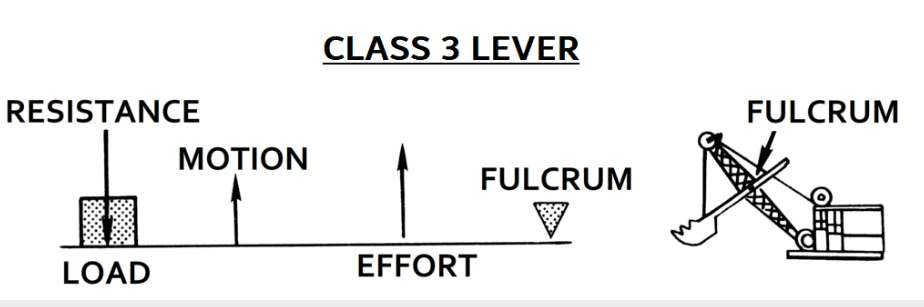
Hip Joint is a Fulcrum in Class 3 Lever
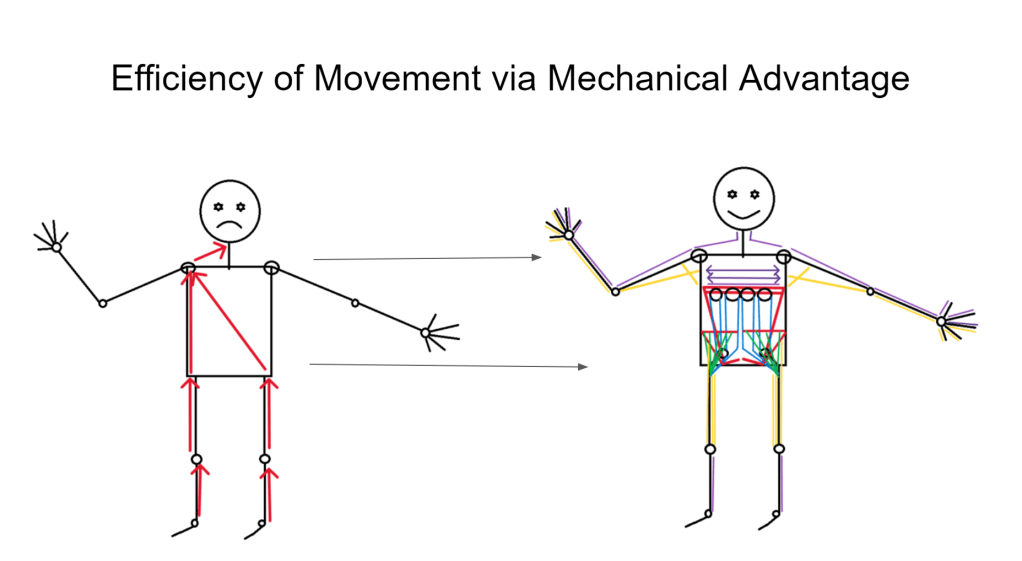
Lats with serratus anterior and external obliques provides more than adequate lever to move the legs while glutes, iliacus and VMO just stabilise the fulcrum. This type of connection stabilises the hip joint in the socket, preventing strain to the ligaments, Acetabulum and/or Labrum. Commonly used in traditional physiotherapy approach by anchoring femur to the ilium bone via glutes
puts excessive strain on the hip joint, lower back and the neck/shoulders.
The overuse of rectus femoris without prior VMO/Iliopsoas engagement can link into Rectus Abdominis and SCM causing unnecessary strain to the hip, spine, neck and shoulders.
Vastus Lateralis typically links to Glute Min.
TLF/ITB links to Glute Med, Piriformis and spinal extensors amplifying the strain to the spine and significantly contribute to excessive stress on the knee joint, in particular lateral condyle and meniscus
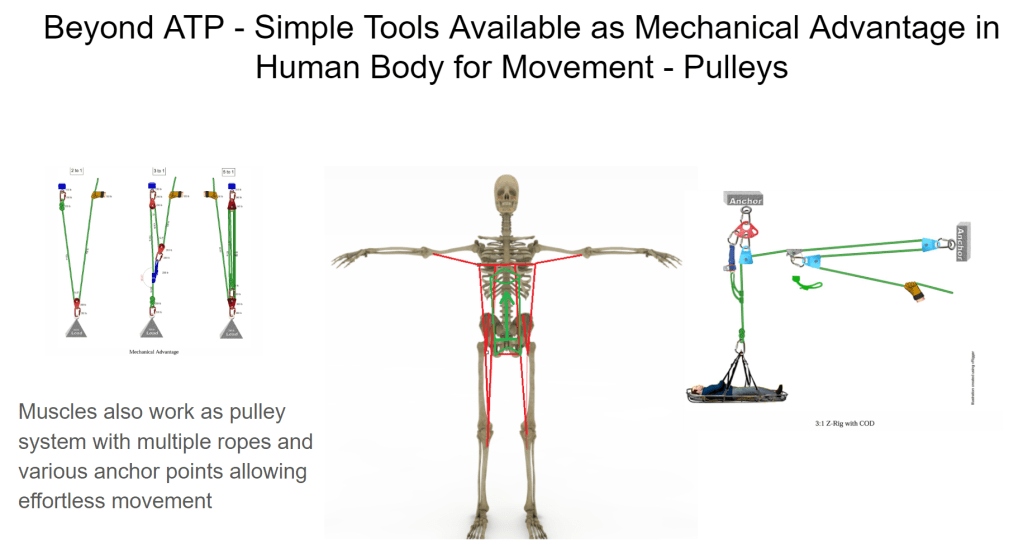
Beyond ATP – Myofascial Lines As Ropes and Pullies
In addition to generating energy via ATP, our muscle fibers also work as ropes similar to the pulley system applied in physics. Those principles commonly used in rigging and rescue, are directly applicable in our body, especially at the knee and ankle joint.
Applying those principles at the knee joint significantly accelerates healing, regardless of the type of injury (including full ACL tear)
Assessing Forces and Point of Action
Identifying the Point Of Action and the Force on shin bone (in particular lateral condyle of tibia), allows to assess the influence of multiple forces on the knee joint. We look at anchor points, vectors and the levers. Our body can use a COMPOUND lever -which in reality can make the movement of the leg effortless and removing all unnecessary friction from the knee joint.
Let’s look at the forces affecting the knee and the hip in more detail:
Vectors and Internal Angles
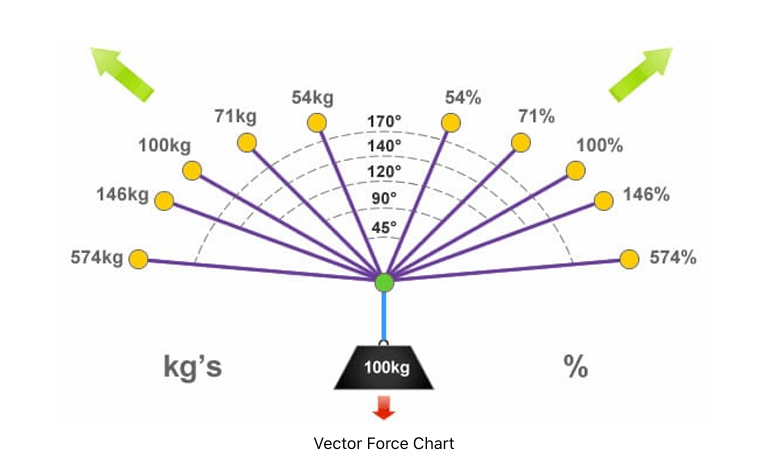
Below Vector Force Chart displays the forces applied to each anchor point when the load is equally shared. In physics, internal angle of less than 45 degrees is the most efficient. The angles need to be maintained accordingly to mitigate excessive load on applicable anchor points (hip and shoulders)
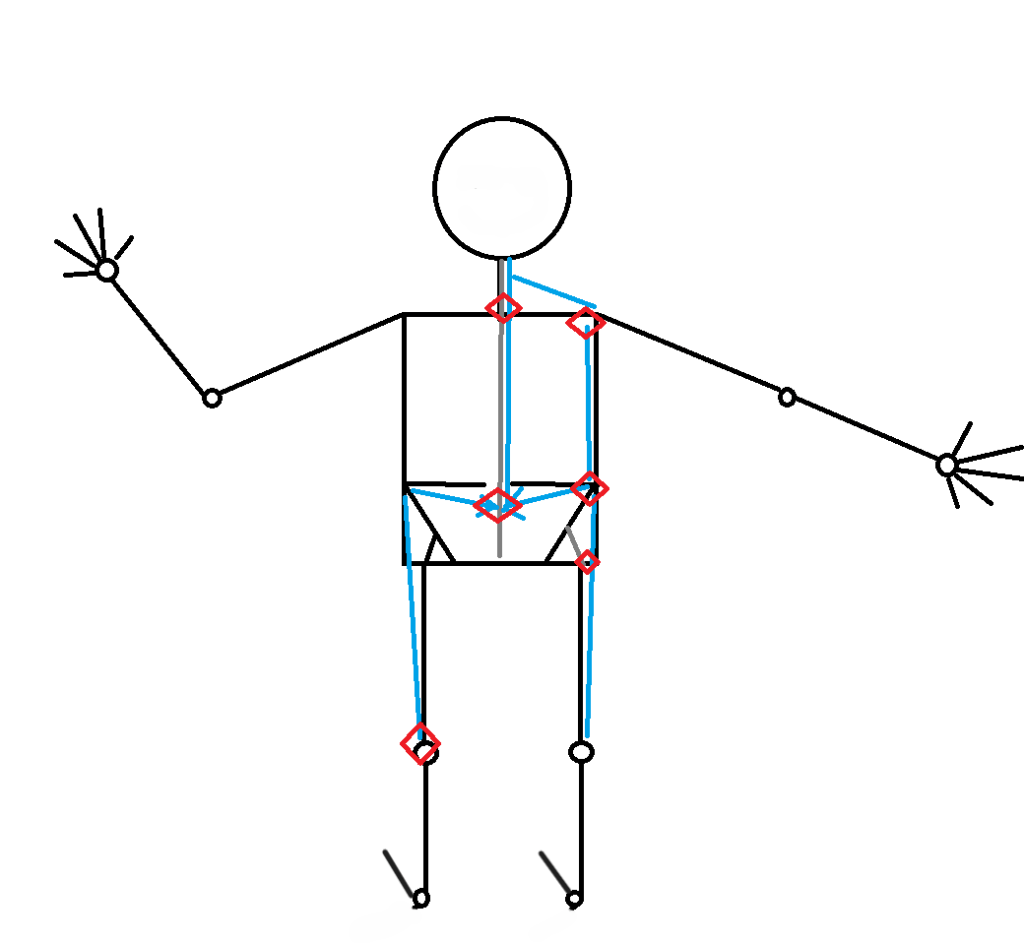
If we use ilium bones/ glutes as primary anchor point in our body without lats/obliques/diaphragm
power ring, it can create close to 175 angle resulting in 10 fold increase on lumbar spine.
Similar load applies to our shoulders/neck if we use them as primary anchor point resulting in stress
on C3-C5 vertebra (disturbed diaphragm function), and/or shoulder injuries.
Anchor Points and Pneumatics
By definition, an anchor point is a point of support, used to secure or stabilise another object or structure. Understanding the forces acting on the anchor is crucial for ensuring the stability and safety of any structure that is supported by it. It can also help to prevent damage or failure of the anchor point itself. Lat / Serratus and Ext Oblique Power Ring (5-7th rib) is the primary anchor point in human body. The lats/glute max line work as a lever and movable anchor. From mechanical point of view, glutes and iliacus utilise ilium bone and sit bones as secondary anchors respectively, stabilising the pivot point only.
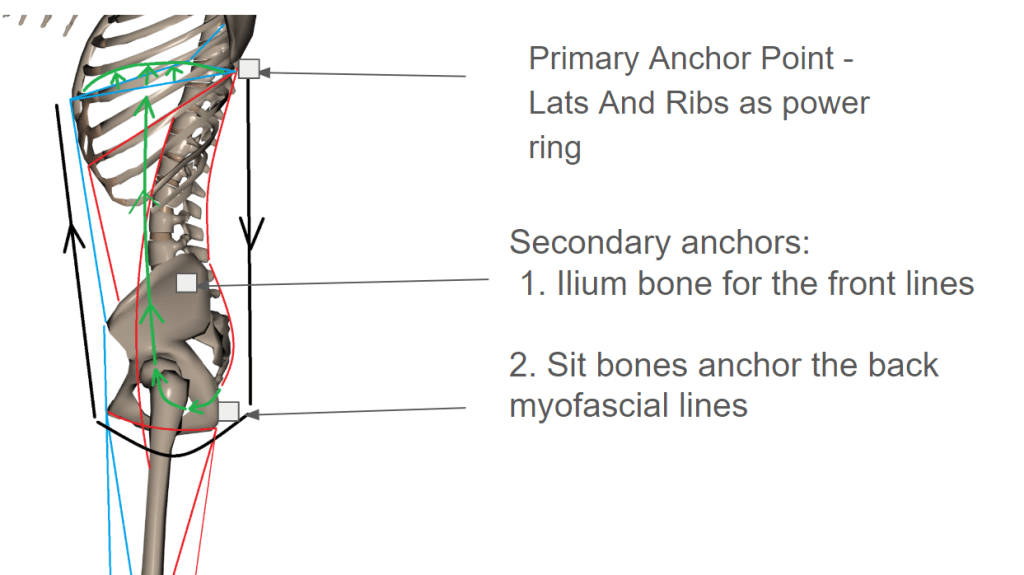
Similarly, using neck and shoulders as our body’s anchor points destabilise the entire body – not only biomechanically but also emotionally and biochemically
Compressed Air
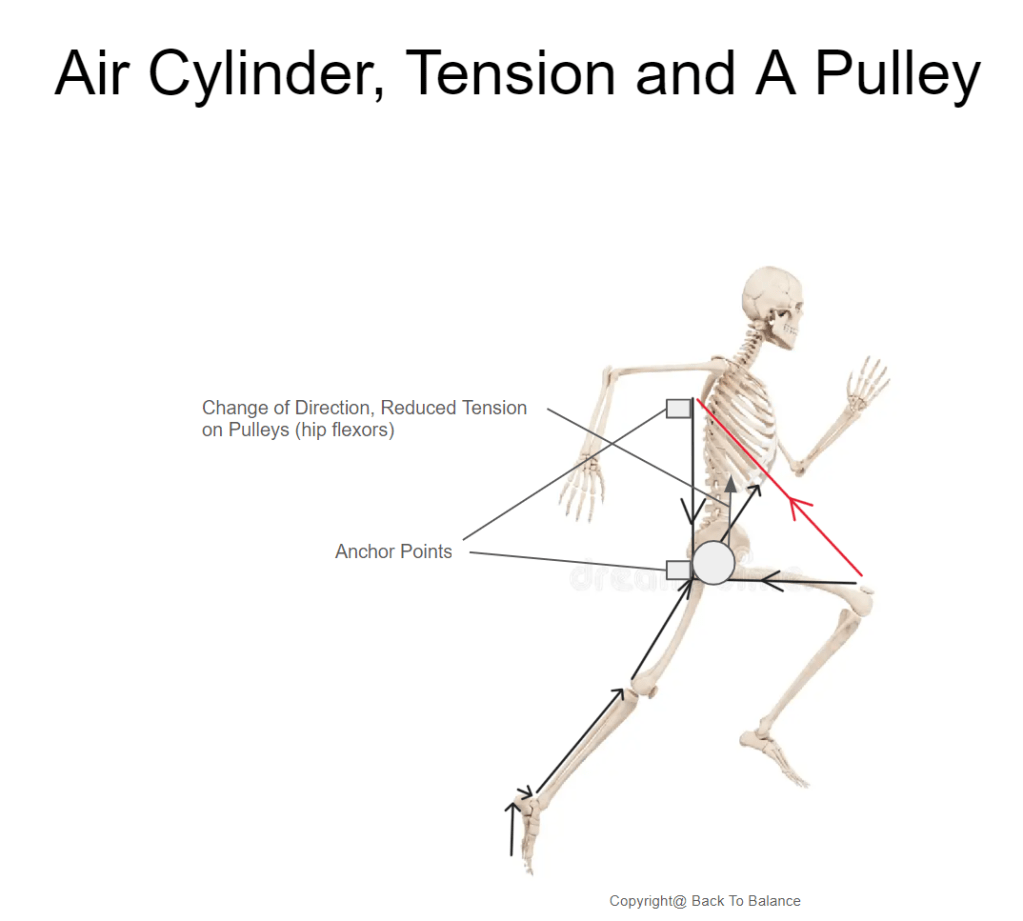
Abdominals compress the air eliminating tension from psoas. Coccyx bone assists in changing direction of compressed air, redirecting it to the diaphragm, making the movement effortless.
 HealMyACL
Leave a comment